FREE ARC FLASH PRE-ASSESSMENT

Plan your arc flash study with a clearer understanding of the scope and cost. ESUK’s free pre-assessment helps you identify the information and assets needed for a fixed-price proposal.
What does an arc flash assessment cost?
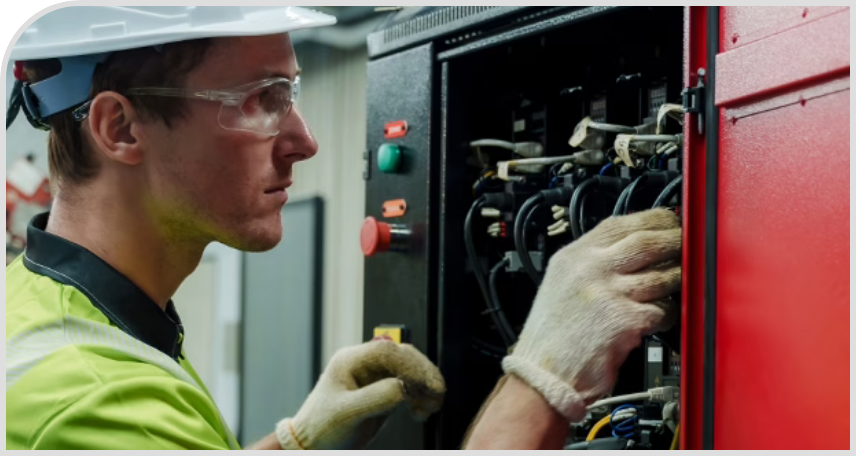
The cost depends on the size and complexity of your electrical network, the assets included and the quality of the available information. Our Principal Electrical Consultant will visit your site free of charge to conduct an initial consultation and an arc flash awareness presentation for nominated personnel.
During the visit, we tour the facility, review relevant documents and carry out a basic circuit count of the electrical distribution network. We use this information to prepare a proposal for the qualifying assets and agreed scope.
Following the visit, you will receive a report and proposed next steps to support your internal approval process. This initial visit is not a full arc flash study or confirmation that your site is safe. Request your free arc flash pre-assessment.
Claim your Free Pre-Assessment here:
ARC FLASH FAQs
An arc flash is a sudden release of electrical energy caused by a fault or short circuit. It can produce intense heat, bright light, pressure, molten metal, and hazardous sound levels—creating serious risks to anyone nearby.
Arc flash incidents can cause severe burns, blindness, hearing damage, electrical shock, respiratory injuries, and other life-threatening harm. The resulting pressure wave may also throw workers or cause flying debris and equipment damage.
Arc flashes may result from:
- Accidental contact with energised conductors
- Dropped tools or loose hardware
- Dust, moisture, corrosion, or other contamination
- Improper installation or maintenance
- Insulation failure
- Equipment defects or deterioration
- Incorrect operation of electrical equipment
Yes. Although the potential energy and incident severity vary by system, arc flash hazards can exist in low-voltage electrical equipment as well as medium- and high-voltage systems.
Potentially hazardous equipment may include:
- Switchgear and switchboards
- Distribution boards and electrical panels
- Motor control centres
- Transformers
- Isolators and breakers
- Control cabinets
- Battery systems
- Industrial machinery
- Other energised electrical equipment
A qualified electrical professional should evaluate the electrical system and determine where arc flash hazards may exist. An arc flash risk assessment may include system data collection, short-circuit analysis, protective-device coordination, incident-energy calculations, equipment labelling, and recommendations for reducing risk.
An arc flash risk assessment is a structured evaluation used to identify electrical hazards, estimate potential incident energy, establish approach boundaries, determine appropriate protective measures, and support safe work practices.
The need for an assessment depends on the equipment, system configuration, available fault current, operating conditions, and applicable workplace requirements. A qualified person should determine the appropriate scope for each facility.
Incident energy is the amount of thermal energy that may reach a worker during an arc flash, typically expressed in calories per square centimetre. It can help determine the level of arc-rated clothing and other protective equipment required.
Arc-rated clothing is designed and tested to reduce the severity of burn injuries during an arc flash. The required clothing and personal protective equipment depend on the hazard and the results of the risk assessment.
Not necessarily. Flame-resistant clothing is intended to resist ignition and continued burning, while arc-rated clothing is tested specifically for exposure to an electric arc. Protective clothing should be selected based on the identified electrical hazard and applicable requirements.
An arc flash label may provide information such as:
- Nominal system voltage
- Arc flash boundary
- Incident energy at a specified working distance
- Required arc-rated personal protective equipment
- Equipment identification
- Assessment or label date, where applicable
Labels should be read carefully and kept current when system conditions or equipment change.
No. Personal protective equipment does not eliminate the hazard or prevent an arc flash from occurring. It is a last line of defence used together with de-energisation, engineering controls, safe work practices, training, and appropriate equipment maintenance.
Whenever feasible, electrically safe work conditions should be established before work begins. If equipment must remain energised, the work should be justified, planned, and performed only by qualified workers using appropriate procedures, boundaries, tools, and protective equipment.
Only properly trained and qualified workers should perform tasks that may expose them to electrical hazards. Employers should ensure workers understand the equipment, hazards, work procedures, limitations, and required protective measures.
An assessment should be reviewed whenever significant changes are made to the electrical system, including changes to transformers, generators, utility service, protective devices, equipment, or operating configurations. It should also be reviewed when an incident or unexpected operating condition indicates that existing information may no longer be accurate.
Risk-reduction measures may include:
- De-energising equipment before work
- Installing equipment designed to reduce arc energy
- Maintaining electrical equipment properly
- Using remote operation or switching methods
- Improving protective-device coordination
- Installing current-limiting devices
- Establishing clear boundaries and procedures
- Providing worker training
- Keeping labels and system documentation up to date
Do not operate or work on equipment that appears damaged, overheated, contaminated, or otherwise unsafe. Keep others away from the area and report the condition to a supervisor or qualified electrical professional immediately.
Yes. Our team can help evaluate electrical systems, perform arc flash studies, provide equipment labelling, recommend risk-reduction measures, and support safe electrical work practices. Contact us to discuss your facility and project requirements.
Safety disclaimer: Arc flash hazards should be evaluated by qualified electrical professionals. This information is provided for general educational purposes and does not replace a site-specific risk assessment, training, safe work procedures, or applicable laws and standards.