
 Health & Safety
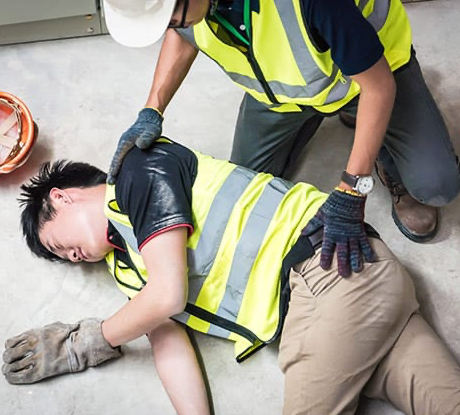
This course covers basic lifesaving skills which are for emergency situations. Training may also be designed to suit various organisational needs and the content will therefore be tailored to suit individual requirements.
We provide a range of Health & Safety training, including First Aid, Electrical Emergency First Aid, Manual Handling, Fire Warden and Fire Marshal training, Asbestos Awareness, DSEAR Risk Assessment and Safety Pass Alliance (SPA) programmes.
SPA training provides industry-specific Health & Safety training for personnel working in particular sectors. ESUK offers SPA Core and sector-specific training, including Food & Drink and Petrol Retail Forecourt programmes, as well as refresher courses.
Yes. We offer Emergency First Aid at Work, First Aid at Work, First Aid at Work renewal and Electrical Emergency First Aid. These programmes help employees develop the knowledge and practical skills needed to respond to workplace emergencies.
Yes. We offer sector-specific programmes, including SPA training for the Food & Drink and Petrol Retail industries. We can also discuss your operational requirements and recommend suitable training solutions.
Our team can help identify the most appropriate training based on employees’ existing experience, job responsibilities, electrical systems and operational risks. We can also undertake competency assessments and recommend suitable training pathways.
Yes. Please contact our training team to discuss available courses, upcoming dates and delegate requirements.
Yes. We can provide group training, either at our training facilities or at your premises, subject to the course and delivery requirements.
Course prices vary depending on the subject, duration, accreditation requirements, number of delegates and delivery location. Please contact us for a quotation tailored to your requirements.
Certificate arrangements depend on the course and its accreditation requirements. We will confirm the assessment and certification arrangements when discussing your chosen programme.
Simply contact our team by telephone, email or through our website enquiry form. We will discuss your requirements and provide a proposal outlining the recommended solution.
It is helpful to provide details of the service or training required, the number of employees involved, their existing experience, your preferred delivery location and any specific operational or site requirements. This allows us to recommend the most appropriate solution.
Yes. Bespoke training is one of our key strengths. We work with organisations to develop training programmes that reflect their specific equipment, electrical systems, working practices, safety rules and operational requirements.
Yes. We can tailor existing courses to incorporate your organisation’s specific safety rules, procedures, equipment and working practices. This helps ensure that training is relevant, practical and directly applicable to employees’ day-to-day responsibilities.
Yes. Where an existing course does not meet your requirements, we can develop a completely bespoke programme, including course content, learning objectives, training materials and delegate assessments.
Yes. We undertake competency assessments to help employers establish whether employees have the necessary knowledge, skills and practical ability to undertake their roles safely and effectively. We can also recommend suitable training and development to address any identified gaps.
Yes. We can develop bespoke training packages, including presentations, trainer notes and delegate assessments. These can be provided for delivery by your own internal training team or delivered by one of our experienced trainers.
Yes. We deliver training to individuals ranging from those with little or no electrical experience through to experienced electricians, engineers, managers and HV specialists. We can adapt the content and level of detail to suit the delegates’ existing knowledge and responsibilities.
Yes. We can deliver training at your own premises, allowing programmes to be tailored around your workplace, equipment and operational environment. This can also be a cost-effective solution for organisations training multiple employees.
We can discuss online and blended learning solutions depending on the course subject, practical requirements and learning objectives. We will recommend the most appropriate delivery method for your organisation.
Yes. We can work with organisations to establish consistent training and competency requirements across multiple locations, incorporating site-specific requirements and global standards where necessary.