

 Back to news
Electrical Safety UK model procedure: Managing Electrical Risk During Fault Finding:
Why Competency and Process Matter
Electrical fault finding is a critical activity in industrial and commercial environments, but it comes with inherent risks that must be managed effectively. The recently updated Management of Risk During Fault Finding procedure provides a structured approach to ensure safety and compliance when working on low-voltage systems.
Why This Matters
Electrical incidents often occur during troubleshooting because systems may remain energised or retain residual charge. Without robust controls, the consequences can include electric shock, arc flash, or even catastrophic equipment failure. This procedure emphasizes that safe working practices are non-negotiable.
Key Principles
- Isolation First
Work should normally be carried out on equipment that has been isolated and proved de-energised. Energised work is only permitted after a formal risk assessment and issuance of a Sanction for Work (SFW).
- Competency is Critical
Fault finding requires trained and experienced personnel. Only Authorised Persons should undertake these tasks, supported by clear documentation and supervision.
- Risk Assessment for Energised Work
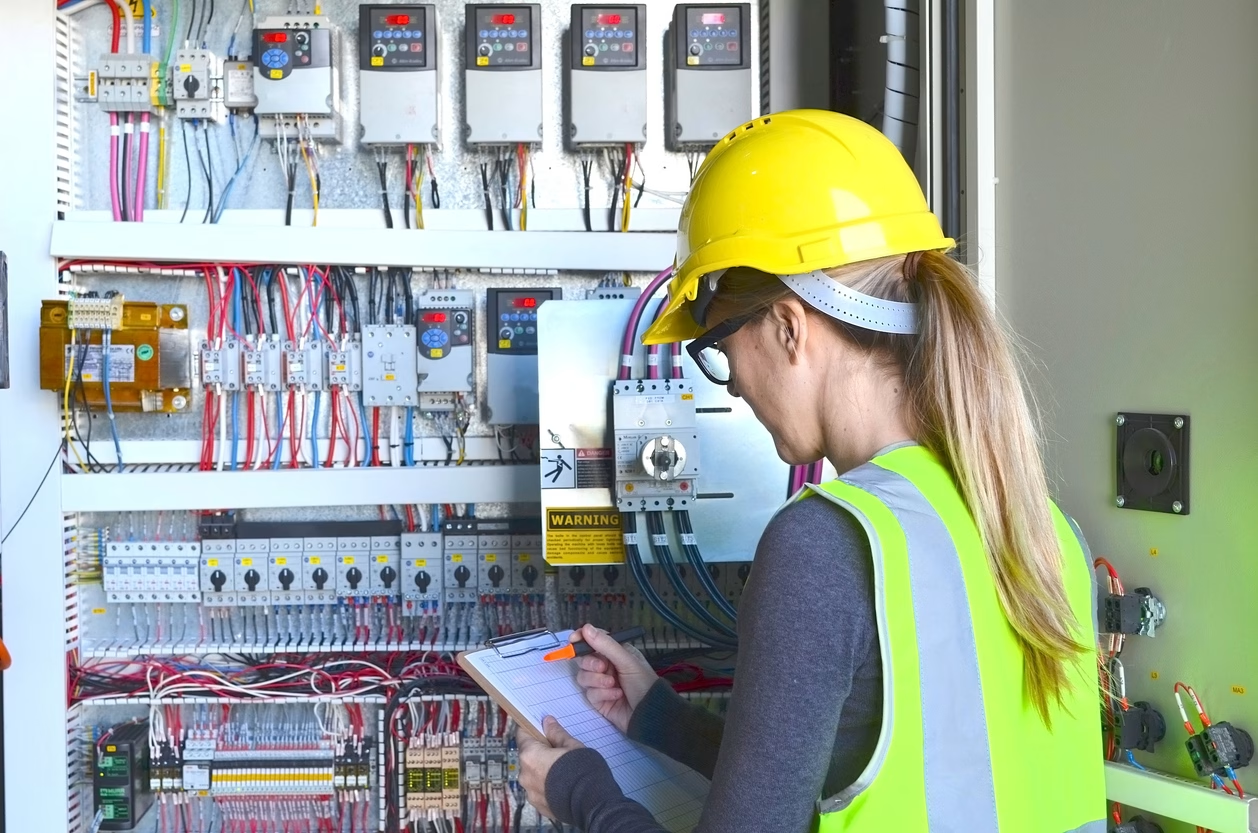
Where de-energization is impractical, the procedure mandates a detailed risk assessment considering factors such as:
- Prospective fault current and arc flash energy
- Condition of equipment and accuracy of documentation
- PPE requirements, including arc-rated clothing and insulated tools
- Need for a standby person and emergency response readiness
- Appropriate test equipment
- Temporary shrouding and adjacent live conductive parts
- Insulated matting
- Activities to be carried out and exposure to arc flash
- Special Hazards: Capacitor Banks & DC Systems
High-energy capacitor banks pose unique risks – electric shock, explosion, and arc blast. The procedure outlines precautions such as manual discharge, PPE rated for incident energy, and maintaining safe approach boundaries.
- Legal and Organisational Compliance
All activities must comply with local legislation and site-specific Electrical Safety Management Systems (ESMS), including your Electrical Safety Rules.
The Bigger Picture
This model procedure reinforces a culture of safety where risk is assessed, documented, and controlled before work begins. It’s not just about compliance – it’s about protecting lives and assets.
How does your organization manage electrical risk during troubleshooting? Do you have a formalised process for energised work?
Take action today:
Audit your electrical safety compliance and close the gaps before they become costly mistakes. Need help? Contact Electrical Safety UK for expert guidance. Call us on 0800 652 1124, email us at info@elecsafety.co.uk or message us through our website at https://elecsafety.co.uk/about/contact/.