

 Back to news

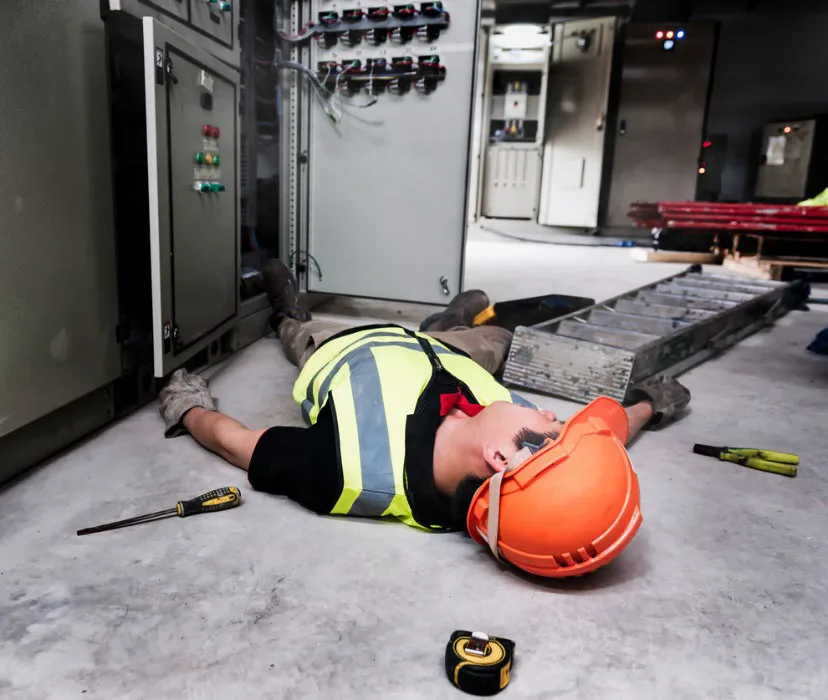
Arc flash (electrical flashover) remains one of the most significant electrical hazards in UK industrial, commercial, and utility environments. Although the UK does not publish a dedicated prescriptive arc flash standard, compliance is still required under existing health and safety legislation, most notably:
- The Health and Safety at Work etc. Act 1974 (HASAWA)
- The Electricity at Work Regulations 1989 (EAWR)
- The Management of Health and Safety at Work Regulations 1999 (MHSWR)
These regulations legally obligate employers and duty holders to assess and manage arc flash risks. Evidence demonstrates that the Health and Safety Executive (HSE) has actively enforced compliance, issuing both Improvement and Prohibition Notices for failures involving arc flash hazards.
This white paper provides a technically rigorous, standards‑aligned guide for UK organisations seeking to understand, assess, and mitigate arc flash hazards.
-
Understanding Arc Flash Hazards
2.1 What is an Arc Flash?
Arc flash is defined as a non‑contact short circuit between energised conductors or between a conductor and earth, typically triggered by insulation breakdown—often simply air in low‑voltage systems.
An arc flash produces:
- Temperatures exceeding 19,000°C,
- Pressure waves (arc blast),
- Molten metal ejection,
- Intense ultraviolet and infrared radiation.
2.2 Prevalence of Arc Flash in the UK
UK data indicates that most serious arc flash injuries occur among electrically qualified workers, often due to underestimation of the hazard.
-
UK Legislative Framework for Arc Flash Management
3.1 Health and Safety at Work etc. Act 1974 (HASAWA)
Employers must ensure, so far as reasonably practicable, the health and safety of employees and others. Arc flash risk assessments are required to comply with HASAWA and associated regulations.
3.2 Electricity at Work Regulations 1989 (EAWR)
EAWR is the cornerstone of UK electrical safety. It explicitly defines injuries from electrical arcing and explosions and mandates prevention of danger through:
- Safe design and construction of systems (Reg. 4(1))
- Proper maintenance (Reg. 4(2))
- Safe systems of work (Reg. 4(3))
- Suitable protective equipment (Reg. 4(4))
The HSE Guidance Notes reinforce that system construction includes design, testing, commissioning, operation, and maintenance throughout the equipment lifecycle.
3.3 Management of Health and Safety at Work Regulations 1999
These regulations require suitable and sufficient risk assessments, which explicitly include arc flash risks. The HSE has previously issued at least 37 enforcement notices citing arc flash‑related failures under MHSWR and EAWR.
3.4 Other Relevant UK Regulations
- Construction (Design and Management) Regulations 2015 (CDM)
- Mines Regulations 2014, where applicable
-
UK Guidance and Standards
4.1 IET Arc Flash Risk Management Factfile
The Institution of Engineering and Technology (IET) publishes the UK’s most comprehensive arc flash guidance, supporting risk‑based approaches.
It highlights:
- The non‑prescriptive UK regulatory environment
- The duty‑holder’s responsibility for proportionate risk control
- The importance of tailored arc flash management (no “one size fits all”)
4.2 EN 50110 – Operation of Electrical Installations
UK businesses frequently apply EN 50110 to structure safe procedures for operation and maintenance.
It underpins many corporate arc flash risk assessment methodologies and is cited by industry guidance.
4.3 European Arc Flash Guide
Authored by Electrical Safety UK founder, Mike Frain CEng FIET MCMI, the European Arc Flash Guide is used widely in UK industry and informs Electrical UK’s “Predict, Prevent, Process, Protect” framework.
-
Arc Flash Risk Assessment Requirements
5.1 Legal Obligation for Assessment
Arc flash studies are required under UK law because EAWR and MHSWR mandate hazard identification and implementation of protective measures.
Organisations must determine:
- Incident energy levels
- Arc flash boundaries
- Protective device coordination
- Suitability of PPE
5.2 What a UK Arc Flash Risk Assessment Involves
A compliant assessment includes:
- Site‑specific inspection and data collection
- Modelling of electrical network behaviour
- Calculation of incident energy and arc flash protection boundary
- Labelling of equipment with arc flash data
- Review of maintenance practices
5.3 When Assessments Must Be Updated
Assessments should be updated when:
- Equipment is modified, replaced, or reconfigured
- Protective devices are adjusted
- Network load conditions significantly change
- Recommended by the duty holder during periodic review
-
Risk Reduction Strategies
6.1 Engineering Controls
- System design to minimise fault energy
- Current‑limiting protection devices
- Arc‑resistant switchgear
- Remote switching technology
- Enhanced maintenance to meet EAWR Reg. 4(2)
6.2 Administrative Controls
- Safe systems of work (Strict LOTO procedures)
- Competency-based training for all electrical personnel
- Job planning and permits for energised work
- CDM-aligned design reviews
6.3 Personal Protective Equipment (PPE)
PPE must meet suitability requirements under EAWR and be maintained and used properly (Reg. 4(4)).
Indicators from UK practice include arc-rated:
- Clothing (IEC 61482-2)
- Face shields / Hoods
- Gloves and voltage
-
The Role of the Electrical Duty Holder
UK law places responsibility for arc flash safety on the Electrical Duty Holder, even when tasks are delegated. Duty holders must ensure:
- Risk assessments are performed
- Protection measures are implemented
- Personnel are competent and informed
Questions every company should ask:
- Who is the Electrical Duty Holder?
- Do they understand their arc flash obligations?
- Best‑Practice Framework for UK Arc Flash Management
Based on UK guidance and industry models (e.g., ESUK’s 4P strategy):
Predict
Identify hazards via arc flash studies.
Prevent
Minimise risk through engineering design and proper maintenance.
Process
Implement robust safe systems of work and clear procedures.
Protect
Use appropriate PPE, labelling, and controls.
-
Conclusion
Although the UK does not have a single prescriptive arc flash standard, legal obligations are clear: organisations must assess, control, and mitigate arc flash risk in accordance with HASAWA, EAWR, and MHSWR. Technical guidance from the IET, EN 50110, and the European Arc Flash Guide provides industry‑accepted methods to achieve compliance.
Arc flash risk is legally enforceable in the UK, with dozens of HSE enforcement actions demonstrating that failure to manage this hazard exposes businesses to severe legal, financial, and personal consequences.
A structured, evidence‑based, engineering‑led safety strategy is essential to protect workers, ensure compliance, and maintain safe and reliable electrical operations.