

 Back to news


Ports and terminals are critical to the UK’s supply chains, supporting container handling, bulk cargo operations, manufacturing, energy distribution and international trade. Behind these activities sits a complex network of electrical infrastructure that must operate safely and reliably, often under demanding conditions.
From high-voltage substations and transformers to quay cranes, conveyor systems, reefer container supplies and shore power installations, electrical equipment is central to day-to-day port operations.
However, the combination of high-power equipment, extensive distribution networks, challenging environmental conditions and pressure to minimise downtime can create significant electrical safety challenges.
One hazard that deserves particular attention is Arc Flash.
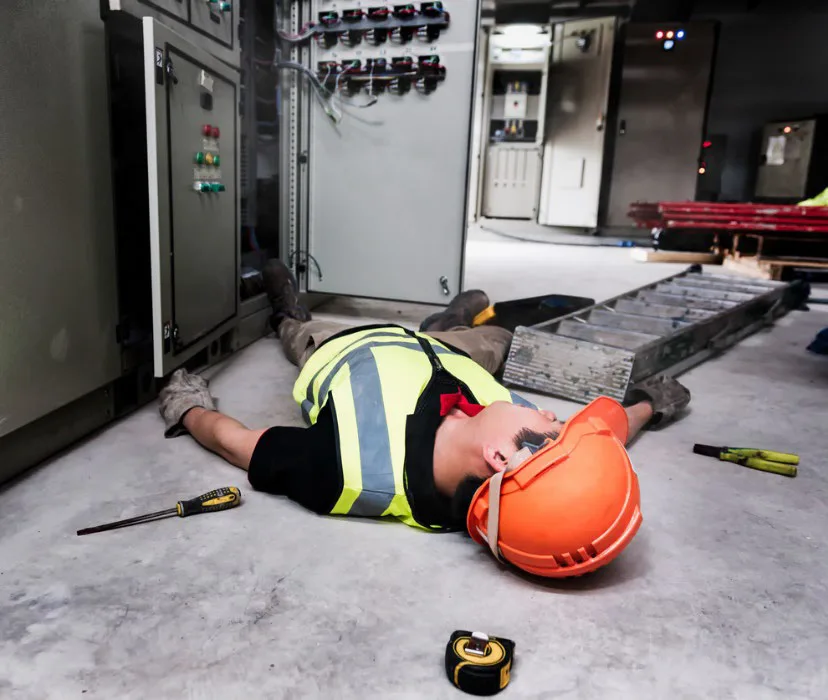
An Arc Flash can release intense thermal energy and may produce pressure effects, molten metal and damaging projectiles. The consequences can include severe burns, permanent injury, equipment damage, fire and operational disruption.
For port and terminal operators, understanding where Arc Flash hazards may exist, how the electrical system behaves and what can be done to reduce risk is an important part of effective electrical safety management.
At Electrical Safety UK (ESUK), we help organisations understand and manage electrical risk through Arc Flash studies, electrical system studies, electrical safety management and technical consultancy.
This article explores the main Arc Flash considerations for UK ports and terminals, the relevant regulatory framework and the practical steps operators can take to improve electrical safety.
Why are ports and terminals exposed to electrical risk?
Ports are not a single type of industrial environment. A container terminal has different electrical demands from those of a liquid bulk facility, a bulk cargo terminal, or a port supporting passenger vessels.
However, many sites share common characteristics that influence electrical safety.
High-power electrical equipment
Port operations can depend on substantial electrical loads, including large cranes, ship-to-shore handling equipment, automated stacking systems, conveyors, pumps, compressors and workshop machinery.
These loads can place significant demands on the electrical distribution system. Depending on the network configuration and available fault current, faults within switchgear, distribution boards and associated equipment may present an Arc Flash hazard.
Continuous operations and pressure to minimise downtime
Ports often work to tight vessel schedules, cargo-handling targets and logistics commitments. An unexpected electrical failure can affect multiple operations and delay the movement of goods.
This pressure can make planning maintenance and isolations challenging. However, production demands must not undermine the controls needed to carry out electrical work safely.
Electrical work should be properly planned, with suitable isolation, risk assessment, competent personnel and appropriate supervision.
Harsh operating environments
Electrical equipment at ports may be exposed to salt-laden air, moisture, wind-driven rain, temperature changes, vibration, dust, contamination and mechanical damage.
These conditions can affect equipment condition over time. Corrosion, deteriorating insulation, loose connections, damaged enclosures and contamination may contribute to faults if not identified and addressed.
The Electricity at Work Regulations 1989 specifically address electrical equipment exposed to adverse or hazardous environments under Regulation 6. Equipment must be appropriately constructed or protected to prevent danger, so far as is reasonably practicable.
Changing infrastructure
Ports frequently evolve as cargo requirements, vessels, handling equipment and operational arrangements change.
New cranes may be installed, substations upgraded, shore power introduced, distribution systems extended or protective devices replaced. Such changes can affect fault levels, protection performance and the electrical risk at particular locations.
An electrical assessment appropriate for the original installation may no longer reflect the system after significant modifications.
Where can Arc Flash risks exist at ports?
Arc Flash risk should be considered across the electrical installation, based on the equipment, system characteristics and work activities involved.
Potential areas for assessment include the following.
1. High-voltage substations and switchgear
Port substations may supply cranes, warehouses, terminal buildings, pumping systems, shore power equipment and other large electrical loads.
High-voltage switchgear, transformers and associated distribution equipment require suitable design, maintenance and operating arrangements.
The potential consequences of an electrical fault depend on factors including available fault current, protection operation, equipment characteristics and the circumstances of the fault. High voltage alone does not determine the level of Arc Flash incident energy.
A suitable electrical system assessment can help establish the relevant fault conditions and identify where additional investigation or risk reduction may be needed.
2. Quay cranes and cargo-handling equipment
Ship-to-shore cranes, rubber-tyred gantry cranes, rail-mounted gantry cranes and other handling equipment rely on electrical power and control systems.
Their electrical arrangements can include incoming supplies, switchgear, motor drives, control panels, transformers and auxiliary systems.
Maintenance and fault-finding activities may expose personnel to electrical equipment, particularly when investigating faults or replacing components.
Risk assessments should reflect the equipment’s actual design, the task being undertaken and the precautions needed to prevent exposure to electrical hazards.
3. Reefer container supplies
Refrigerated containers require electrical supplies to maintain the conditions needed for their cargo.
Reefer areas may contain large numbers of connection points and distribution equipment, sometimes across extensive outdoor locations.
The condition of sockets, connectors, cables and distribution equipment should be monitored through appropriate inspection and maintenance arrangements. Damaged equipment, unsuitable repairs, or inadequate isolation can cause electric shock, fire, and other electrical hazards.
Where work involves distribution boards or other equipment that can present an Arc Flash hazard, the risk should be assessed accordingly.
4. Conveyor systems, pumps and motors
Bulk cargo terminals may operate extensive conveyor networks, crushers, loading systems, pumps and other motor-driven machinery.
Electrical equipment can include motor control centres, variable-speed drives, local isolators, distribution boards and control panels.
Fault-finding and maintenance activities should account for electrical energy as well as other hazardous energy sources, including mechanical movement, hydraulic pressure and stored energy.
The relevant equipment must be isolated and secured against inadvertent re-energisation before work begins where required by the safe system of work.
5. Shore power installations
Shore power allows compatible vessels to connect to an electrical supply while alongside, potentially reducing the need to run onboard generators during the connection period.
These installations introduce additional electrical interfaces between shore-side infrastructure and the vessel.
The design, operation and maintenance arrangements must account for the particular system, including connection and disconnection procedures, interlocks, earthing arrangements, protection and the coordination of responsibilities between the shore-side operator and the vessel.
The applicable electrical safety requirements will depend on the installation and whether the equipment is shore-side or part of the shipboard system.
Arc Flash risk should be assessed wherever the equipment and work activities could expose people to an arc hazard.
6. Workshops, warehouses and terminal buildings
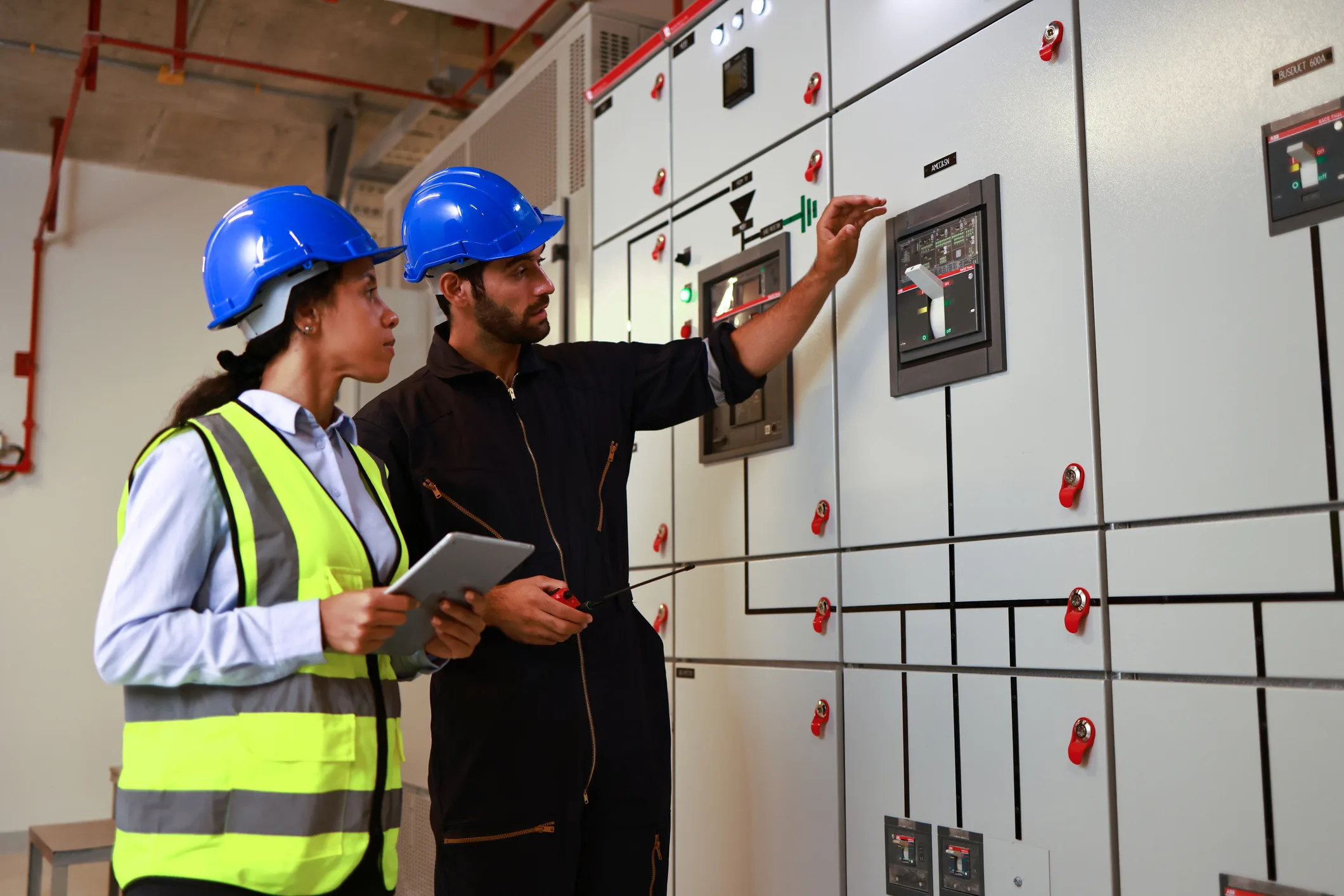
Port facilities also contain conventional industrial and commercial electrical installations, including low-voltage switchboards, distribution boards, maintenance workshops and plant rooms.
These systems should not be overlooked simply because they are separate from the main cargo-handling equipment.
The potential risk depends on the electrical characteristics of the installation, the condition of the equipment, the performance of protective devices, and the work being carried out.
What determines Arc Flash incident energy?
Arc Flash risk cannot be determined reliably from voltage or equipment size alone.
A technical assessment may need to consider:
- The prospective short-circuit current at the equipment.
- The electrical network configuration and available sources of fault current.
- The protective devices installed and their operating characteristics.
- The time required for the protection system to detect and clear a fault.
- The equipment design and relevant enclosure characteristics.
- The working distance and the circumstances in which people may be exposed.
- The nature of the task and the likelihood of an incident occurring.
The interaction between these factors matters. For example, the available fault current may be high, but the resulting incident energy also depends on how the protection system responds and how quickly the fault is cleared.
Conversely, lower fault current does not automatically mean lower Arc Flash risk, particularly if a protective device takes longer to operate under the relevant fault conditions.
This is why an Arc Flash assessment should be based on appropriate electrical system data and a sound understanding of the installation.
The importance of Arc Flash studies at ports and terminals
An Arc Flash study can help operators understand potential incident energy levels at relevant points within their electrical systems and identify opportunities to reduce risk.
Depending on the scope, the work may include collecting site data, reviewing electrical drawings, modelling the network, calculating short-circuit conditions, assessing protective device performance and determining incident energy and Arc Flash boundary information.
For a port, this may involve considering the main incoming supplies, substations, transformers, distribution boards, crane supplies, motor control centres, shore power systems and other relevant equipment.
The scope should reflect the installation’s complexity and the locations where people may interact with electrical equipment.
Understanding the whole electrical network
Port electrical systems can be interconnected, and changes in one part of the network may affect conditions elsewhere.
For example, a transformer replacement, a change to the incoming supply or an alteration to protection settings may affect fault levels or protection operation at downstream equipment.
A study should therefore use accurate data and reflect the relevant operating configurations. Where a site has multiple operating modes or alternative supplies, these may need to be considered in the assessment.
Identifying opportunities to reduce risk
The value of an Arc Flash study is not limited to producing labels or documenting calculated incident energy.
The findings can help inform decisions about protection coordination, equipment upgrades, operating arrangements, maintenance priorities and working procedures.
The appropriate measures will depend on the identified risks and the installation’s technical characteristics.
An Arc Flash study should also be coordinated with relevant short-circuit and protection coordination studies, where needed, to understand the system’s behaviour.
Engineering controls: reducing risk at source
Where an Arc Flash hazard has been identified, the priority should be to consider how to eliminate or reduce the risk, rather than relying on personal protective equipment alone.
Depending on the installation and the assessment findings, possible measures may include the following.
Reviewing protection settings
Protective devices should operate to address fault conditions while maintaining the required protection and coordination of the wider electrical system.
A review may identify opportunities to reduce fault-clearing times or improve discrimination between devices.
However, protection settings should not be changed in isolation. Changes must be supported by appropriate engineering analysis to ensure that the system continues to provide the required protection and reliability.
Remote switching and operation
Remote switching or racking may reduce the need for personnel to stand close to certain electrical equipment during specific operations.
Whether this is appropriate depends on the equipment design, operational requirements and the risks associated with the activity.
Remote operation does not remove the need for suitable procedures, maintenance and risk assessment.
Equipment design and condition
Where justified by the risk assessment, equipment selection or upgrade options may include designs that provide additional protection against the effects of an internal arcing fault.
The suitability of any proposed measure should be assessed against the installation, the relevant hazards and the intended operating conditions.
Maintenance and inspection
Planned inspection and maintenance can help identify deterioration, defects and changes that may affect electrical safety.
For port environments, maintenance arrangements should account for corrosion, moisture, contamination, vibration, and mechanical damage where relevant to the equipment.
Defects should be recorded, prioritised and addressed through a controlled process.
Safe isolation and electrical work
Safe isolation is fundamental to managing electrical risk at ports and terminals.
Electrical work should be planned so that the equipment can be made safe before work begins, wherever this is reasonably practicable and required by the circumstances.
The process must account for all relevant sources of electrical energy, not just the most obvious supply.
Depending on the installation, this may include incoming supplies, alternative feeds, generators, UPS systems, control supplies, shore power connections and energy stored within equipment.
The safe system of work should identify the correct equipment, establish secure isolation, prevent inadvertent re-energisation and require suitable verification that the equipment is safe to work on.
Switching equipment off is not the same as proving it is dead.
The Electricity at Work Regulations 1989 are particularly relevant:
- Regulation 12 addresses the means of cutting off the supply and isolation.
- Regulation 13 requires adequate precautions to prevent equipment made dead for work from becoming electrically charged where danger may arise.
- Regulation 14 sets conditions that must be met before work can be carried out on or near certain live conductors.
- Regulation 15 addresses working space, access and lighting.
- Regulation 16 addresses the competence required to prevent danger and injury.
Work on or near live conductors should not be treated as a routine alternative to safe isolation. The conditions set out in Regulation 14 must be met where it applies, and suitable precautions must be taken.
Procedures must be appropriate to the equipment and the work involved. High-voltage switching and other specialist activities require suitable technical knowledge, experience, authorisation and supervision.
Electrical safety in hazardous port environments
Some port and terminal operations involve flammable liquids, gases, vapours, combustible dusts or other substances that can create a potentially explosive atmosphere.
This may be relevant to certain fuel terminals, chemical facilities, tank farms and bulk-handling operations.
In these areas, electrical safety arrangements must also consider the risk of ignition.
The Dangerous Substances and Explosive Atmospheres Regulations 2002 (DSEAR) may apply where dangerous substances create a risk to safety from fire, explosion or similar energetic events. The specific duties depend on the hazards and activities at the site.
Electrical equipment in a hazardous area must be suitable for the conditions and the relevant hazardous-area requirements. Work planning should consider the site’s risk assessment, the equipment’s suitability, isolation arrangements and any additional precautions needed to control ignition sources.
Arc Flash and hazardous-area ignition are distinct issues, although both may need to be considered within a broader electrical and process safety assessment.
UK legislation and guidance for port electrical safety
UK port and terminal operators should identify the legislation and guidance relevant to their installations and activities.
Key provisions may include the following.
Electricity at Work Regulations 1989
These Regulations establish requirements for electrical systems, work activities and protective equipment to prevent danger, so far as is reasonably practicable.
They address matters including the construction and maintenance of electrical systems; equipment exposed to adverse environments; isolation; precautions for work on equipment made dead; work on or near live conductors; and competence.
The Regulations apply to work activities and premises within their scope. Particular exceptions apply to certain offshore installations and ships, so the applicable framework should be established for shipboard equipment and activities rather than assuming the same provisions apply in every case.
Management of Health and Safety at Work Regulations 1999
These Regulations include duties relating to risk assessment, preventive and protective measures, arrangements for managing health and safety, information and training.
For port operators, this means identifying foreseeable hazards, assessing who may be harmed, and establishing suitable arrangements to control risk.
Dangerous Substances and Explosive Atmospheres Regulations 2002
DSEAR is relevant where dangerous substances pose risks of fire, explosion, or similar energetic events.
Where applicable, operators must assess the risks and implement appropriate measures to eliminate or reduce them. This can include the suitability of electrical equipment and the control of ignition sources in hazardous areas.
HSE guidance
The Health and Safety Executive provides guidance to help dutyholders understand and apply electrical safety requirements.
Relevant publications include:
- HSR25: The Electricity at Work Regulations 1989: Guidance on Regulations.
- HSG85: Electricity at work: Safe working practices.
These publications provide practical guidance for those responsible for electrical systems, including engineers, technicians, managers and supervisors.
The appropriate requirements should be determined for the actual site and activities. A list of regulations alone does not demonstrate that electrical risks have been adequately controlled.
Keeping electrical risk assessments up to date
Port infrastructure can change significantly over time. Electrical assessments and procedures need to reflect the installation as it exists, not simply its original design.
A review may be needed following changes such as:
- Installation or replacement of transformers or switchgear.
- Changes to the incoming supply or network configuration.
- New cranes, conveyor systems or high-power equipment.
- Installation or modification of shore power systems.
- Changes to protection devices or settings.
- Significant electrical maintenance or refurbishment.
- Changes to operating arrangements or sources of generation.
- Electrical incidents, faults or relevant near misses.
The need for review should be based on the nature and significance of the change, the findings of the risk assessment and the organisation’s management arrangements.
Routine maintenance, periodic inspection and change control should work together to help ensure that electrical risks remain understood and appropriately managed.
Questions port operators should be asking.
A structured review of electrical safety arrangements can help identify gaps and establish priorities for improvement.
Port and terminal operators should consider the following questions:
- Do we understand the Arc Flash hazards associated with our electrical systems?
- Are our electrical drawings and network data accurate and up to date?
- Have relevant fault levels and protective device performance been assessed?
- Are isolation and switching procedures specific to the equipment and work involved?
- Are personnel competent and appropriately authorised for their duties?
- Are contractors managed through clear electrical safety arrangements?
- Is equipment inspected and maintained for the environmental conditions in which it operates?
- Have hazardous areas and dangerous substances been considered where relevant?
- Are proposed engineering improvements prioritised according to risk?
- Do our assessments reflect recent changes to the electrical installation?
If these questions cannot be answered confidently, an electrical safety review may help establish the current position and identify the next steps.
How ESUK can help ports and terminals
Electrical Safety UK supports organisations in understanding and managing electrical risk across complex industrial installations.
Our services include Arc Flash studies, electrical system studies, electrical safety management reviews, technical consultancy and training.
For ports and terminals, support may include:
- Assessing Arc Flash risk across relevant electrical equipment.
- Reviewing short-circuit levels and protection coordination.
- Identifying opportunities for engineering risk reduction.
- Reviewing electrical safety rules, procedures and management arrangements.
- Helping prioritise improvements to electrical safety.
- Supporting competence and awareness through appropriate training.
Our approach is to help organisations understand the risks associated with their electrical systems and develop practical, technically informed measures to manage them.
Take a closer look at your port’s electrical safety.
Ports and terminals depend on electrical infrastructure to keep cargo moving and operations running. Managing the associated risks requires more than responding to faults when they occur.
A clear understanding of the electrical network, effective safe systems of work, competent personnel, and appropriate engineering controls all play important roles.
If you are responsible for electrical safety at a port or terminal, contact ESUK to discuss your requirements and arrange an initial consultation.
Telephone: 0800 652 1124
Email: info@elecsafety.co.uk
Website: https://elecsafety.co.uk/
Understanding the risk is the first step towards managing it.