

 Back to news

In today’s Food Industry, electrical safety is no longer optional — it is a strategic necessity. As organisations continue to modernise their electrical infrastructure, the risks associated with fault currents, arc flash events, and equipment degradation have become increasingly significant. A recent Arc Flash Risk Assessment undertaken by our engineering team at a global food manufacturer highlights just how critical structured electrical safety management has become.
This project demonstrates the transformative value an Arc Flash Risk Assessment can bring to any facility looking to reduce risk, strengthen compliance, and protect its workforce.
Why Arc Flash Assessments Matter More Than Ever
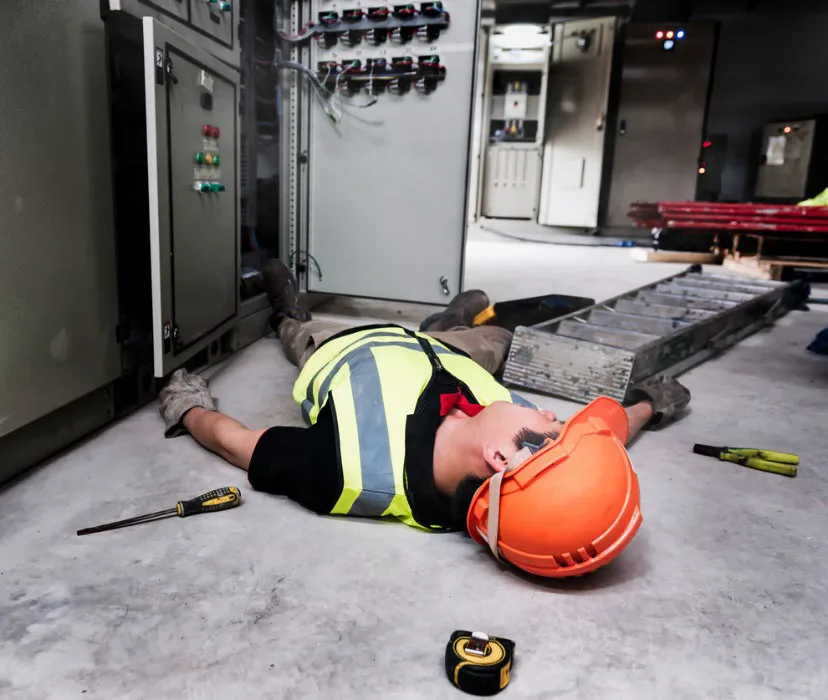
Arc flash events remain one of the most severe electrical hazards in the workplace. Although rare, they can cause devastating injuries, significant asset damage, and long‑term operational disruption. Many organisations still underestimate how fast an arc flash incident can occur and how essential it is to have accurate, data‑driven insights into their electrical network.
A full Arc Flash Risk Assessment provides:
- Clear visibility of incident energy levels across the entire distribution system
- Identification of high‑risk locations where risk reduction is essential
- Evidence‑based guidance for PPE, safe working procedures, and access controls
- Support for compliance with UK regulations and good practice (NFPA 70E, IEEE 1584 and EN 50110)
- Confidence that protective devices will operate correctly under fault conditions
This project delivered all of the above – and demonstrated exactly why organisations benefit from proactively analysing electrical risk.
Key Insights from the Assessment
Our study included a full site data collection exercise, fault current analysis, protection coordination review, and IEEE 1584‑2018 arc flash modelling.
Identification of a High‑Energy Hazard Location
One switchboard was found to have a very high incident energy level of 82.1 cal/cm². This highlighted the urgent need for engineering intervention to reduce the hazard.
Confirmation of Safe Fault Current Levels
Despite missing utility fault‑level data, worst-case modelling at 25kA and 12.5kA confirmed that protective devices were within their breaking capacity – a positive result often overlooked by facilities.
Condition‑Related Risks Identified
The survey uncovered:
- Missing panel fasteners
- Rusted and degraded enclosures
- Missing trunking lids
- Exposed internal conductors
- Inconsistent labelling and maintenance gaps
These issues not only elevate arc flash risk but also expose organisations to compliance failures.
Protection Coordination Concerns
Several areas showed potential miscoordination, meaning downstream faults may not clear quickly enough – significantly increasing incident energy levels. Correct coordination is one of the most powerful engineering tools for reducing arc flash severity.
Turning Insight into Action
The study provided a structured roadmap for improving safety, including:
Engineering Recommendations
- Fitting a suitable trip unit to reduce incident energy on the main LV switchboard
- Verifying protection settings
- Improving condition of enclosures and trunking systems
- Adjusting protection settings whilst maintaining coordination to lower incident energy levels throughout the network
- Considering a partial protection coordination study
Safe Working Practice Enhancements
- Updating electrical safety rules and induction training
- Introducing or improving arc‑rated PPE policies
- Reinforcing the hierarchy of controls to eliminate live work
- Conducting task‑based risk assessments for panels that require proximity working
Labelling & Documentation
Clear, accurate arc flash labelling is one of the final – and most visible – outputs of an assessment. It gives every worker immediate access to critical safety information before starting work.
The Bigger Picture: Protecting People, Assets, and Operations
An Arc Flash Risk Assessment is far more than a compliance exercise — it is a forward‑thinking investment in:
- Employee safety
- Operational continuity
- Regulatory confidence
- Corporate responsibility
- Long‑term asset protection
By identifying high‑risk areas, confirming safe working zones, and providing practical engineering and procedural recommendations, this project enables the organisation to make informed, financially sound safety decisions. Engineering solutions were assessed using ALARP principles, ensuring all recommendations were not only effective but also proportionate and economically justified.
Leading the Way in Electrical Safety
The results of this assessment underline the importance of ongoing electrical risk management. As electrical networks evolve and facilities grow more complex, a one‑time assessment is no longer enough. Instead, organisations should adopt a continuous improvement mindset – revisiting arc flash studies at least every five years or whenever significant changes occur.
Our team is proud to support organisations of all sizes in raising their electrical safety standards, protecting their people, and future‑proofing their operations.
If your facility has not yet undertaken a modern arc flash study — or if your current report is more than five years old — now is the perfect time to act.
Take advantage of a free consultation with one of our Principal Consultants to discuss your needs and have your questions answered. We can provide you with a free, no obligation quotation for your arc flash needs including training.
Give us a call on 0800 652 1124, email us at info@elecsafety.co.uk or contact us through our website at https://elecsafety.co.uk/about/contact/.