

 Back to news

Hospitals are built around one principle:
Protect life at all costs
Every system, every process, every protocol is designed to ensure continuity of care.
Yet, despite these efforts, one risk remains largely overlooked: Arc-Flash.
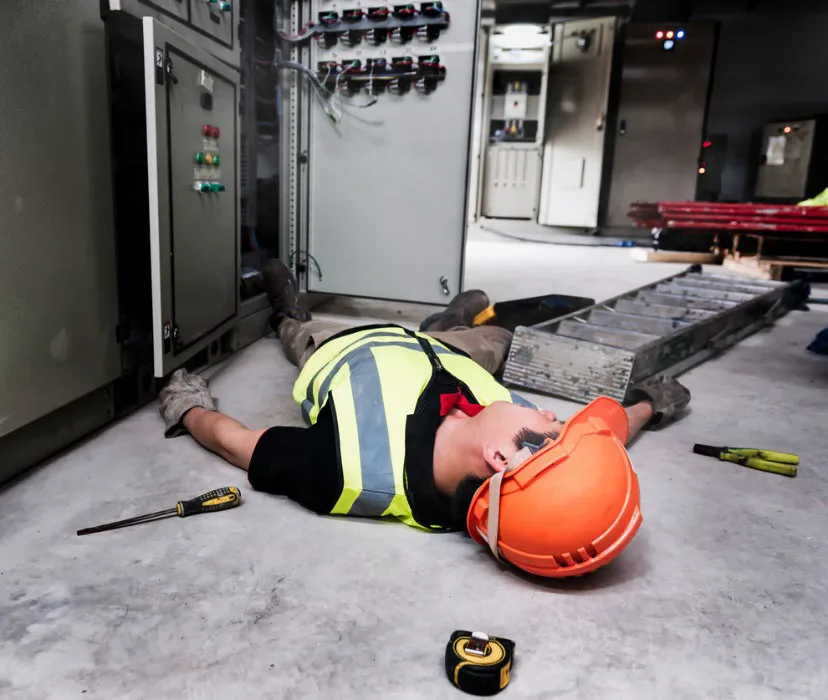
And when it occurs, it doesn’t just damage equipment.
It compromises patient safety
The Reality: Complex Systems Under Constant Demand
Healthcare environments are among the most electrically complex in any sector.
- Critical care equipment is running continuously.
- Essential systems that cannot be powered down.
- Ageing infrastructure alongside modern upgrades.
- Ongoing maintenance in live environments.
This creates a high-risk electrical landscape often without full visibility of the hazard.
Arc Flash in Healthcare: The Consequences Are Different
In most sectors, an Arc-Flash incident means:
- Injury
- Equipment damage
- Downtime
In healthcare, it goes further:
- Loss of power to life-critical systems
- Disruption to operating theatres and the ICU
- Risk to vulnerable patients
- Immediate pressure on already stretched teams
Arc-Flash isn’t just a safety issue; it’s a direct threat to clinical care.
Why This Risk Is Often Underestimated
Hospitals are highly regulated environments.
There is a strong focus on:
- Infection control
- Patient safety
- Clinical governance
- Equipment reliability
But electrical risk, particularly Arc-Flash (a sudden electrical explosion), is often assumed to be managed within existing maintenance frameworks.
Assuming is not assessing, and only assessment reveals the real risk.
Without a detailed arc flash study, organisations typically don’t know:
- Their true incident energy levels
- Where the highest risks exist
- Whether current controls are appropriate
Arc Flash Studies: Bringing Clarity to Critical Infrastructure
An Arc-Flash study provides the data needed to properly manage risk.
It identifies:
- High-risk equipment and locations
- Incident energy levels across the system
- Safe working distances and boundaries
- Where risk can be reduced through engineering controls
This enables estates and facilities teams to move from assumption to assured control.
Protecting People — Without Compromising Care
One of the biggest challenges in healthcare is balancing safety with continuity.
Shutting systems down is not always an option.
That’s why arc flash risk management must be:
- Planned
- Engineered
- Embedded into operational procedures
This includes:
- Defining safe systems of work
- Ensuring correct, proportionate PPE
- Minimising the need for live working wherever possible
Because safety measures should never introduce new risks to patient care.
The Role of Engineering — Not Just PPE
Too often, Arc-Flash protection is reduced to PPE.
In reality, that’s the final layer.
Effective risk management focuses on:
- Reducing incident energy levels
- Improving system coordination
- Eliminating unnecessary exposure
In healthcare environments, this is critical.
Heavy PPE is not always practical, especially in confined or sensitive areas.
The safest risk is the one engineered out.
People Remain at the Centre of Risk
Even in highly controlled hospital environments, human interaction is unavoidable.
Routine tasks such as:
- Maintenance
- Switching operations
- Fault response
All triggers can cause an Arc-Flash if risks are not fully understood.
That’s why training and awareness are essential:
- Recognising real hazards
- Following defined procedures
- Understanding system-specific risks
Given these factors, ask yourself: Is Your Electrical Risk Profile Up to Date?
Healthcare estates evolve constantly:
- New equipment installations
- Infrastructure upgrades
- Changes in load and demand
Every change can alter your arc-flash risk profile.
Best practice is clear:
- Review every 5 years.
- Or following any significant system change
If your study is outdated or never completed, your risk is unknown.
Resilience Isn’t Just Backup Power
Hospitals invest heavily in resilience:
- Generators
- UPS systems
- Redundant supplies
True resilience depends on controlled electrical systems—not just backups.
Because one uncontrolled Arc -Fash event can:
- Take systems offline
- Damage critical infrastructure
- Put patients at risk.
Take Control of the Risk You Can’t See
Arc-flash risk doesn’t announce itself.
It sits within your infrastructure until something triggers it.
Healthcare organisations that lead on safety:
- Understand their risk in detail.
- Engineer it down where possible.
- Control what remains
Speak to ESUK
If you’re responsible for estates, facilities, or electrical safety within a healthcare environment, the question is simple:
Do you know your Arc-Flash risk level?
If not, we can help.
Speak to one of our Principal Consultants for a no-obligation discussion.
We’ll help you assess your exposure and take action.