

 Back to news
In electrical safety, quality isn’t demonstrated by statements or certifications alone — it’s demonstrated by how consistently risk is managed across every service an organisation delivers.
That’s why the scope of an ISO 9001 certification matters just as much as the certification itself.
Beyond the Badge: What ISO Scope Really Means
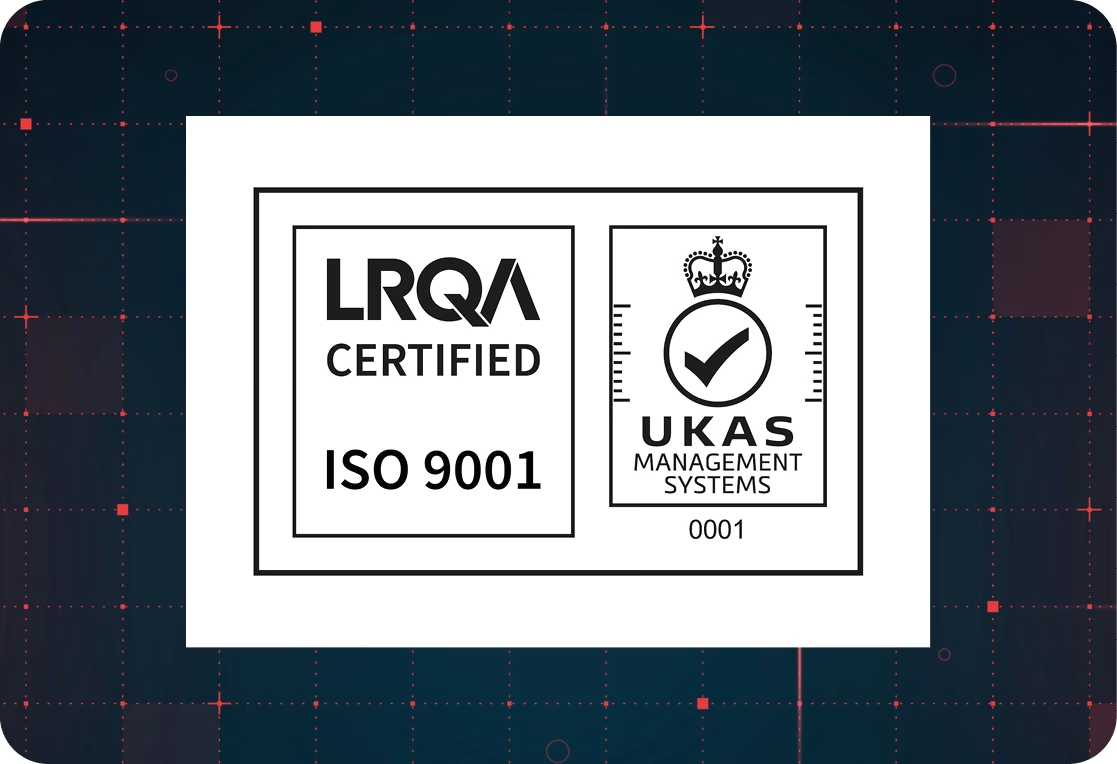
ISO 9001 is widely recognised as the international standard for quality management systems. However, what is often overlooked is that certification only applies to the defined scope of activities audited.
In practical terms, this means some organisations may hold ISO 9001 certification for one element of their operation, while other services sit outside that governed framework.
From a client or duty holder perspective, this can introduce inconsistency particularly where training, consultancy, and specialist technical work intersect.
A Systems-Based Approach to Electrical Safety
Effective electrical safety management relies on alignment. Training must reflect real-world systems. Consultancy must be grounded in operational practice. Specialist studies must sit within a clear governance framework.
When these elements operate under different processes or standards, gaps can emerge gaps that increase risk rather than reduce it.
At ESUK, our ISO 9001 scope now covers:
- Training and assessment
- Electrical consultancy
- Specialist electrical safety studies and systems
This means a single Quality Management System underpins our entire service catalogue, ensuring consistent planning, delivery, review, and continual improvement across all disciplines.
Why This Matters for Duty Holders and Clients
For organisations responsible for electrical safety, assurance matters.
An expanded ISO scope provides confidence that:
- Processes are consistent and auditable across all services
- Governance does not change depending on the type of engagement
- Risk is managed through structured, documented systems
- Quality controls apply equally to advisory, technical, and training activities
This is particularly important where services contribute directly to Electrical Safety Management Systems (ESMS), safe systems of work, and procedures such as electrical isolation and immobilisation.
When consultancy advice, specialist studies, and training are all delivered under the same quality framework, the result is greater clarity, stronger controls, and reduced exposure to operational and compliance risk.
Quality as an Enabler, Not an Obstacle
There is a misconception that quality systems add bureaucracy. In reality, well-designed quality management enables better decision-making, clearer accountability, and more reliable outcomes.
A single, organisation-wide ISO framework ensures that:
- Lessons learned in one area inform improvements elsewhere
- Documentation, review, and validation are consistent
- Clients receive the same standard of service regardless of entry point
This is especially critical in electrical safety, where fragmented approaches can undermine otherwise well-intentioned controls.
Continual Improvement in Practice
ISO 9001 is not a static achievement. Its value lies in continual improvement — reviewing performance, identifying weaknesses, and strengthening systems over time.
Expanding our ISO scope reflects an intentional step towards aligning all ESUK services under one robust governance model, supporting long-term improvements in safety, reliability, and client assurance.
In Summary
Electrical safety depends on systems, not silos.
An ISO 9001 certification that spans training, consultancy, and specialist studies ensures that quality, consistency, and accountability are embedded across every aspect of service delivery.
For clients, this provides confidence that electrical safety advice and support is not only technically competent, but governed, auditable, and delivered to a consistent standard — every time.