

 Back to news

The Arc Flash Threat No Operator Can Ignore
In data centres, everything is engineered for resilience.
Redundancy. Backup systems. Failover protection.
But there’s one risk that often sits outside that conversation:
Arc flash.
And unlike cyber threats or system failures, it doesn’t degrade performance.
It stops everything. Instantly.
The Reality: High Power, High Risk
Data centres operate in one of the most electrically intense environments in any industry.
- High fault current levels
- Complex distribution systems
- Continuous live operations
- Frequent maintenance intervention
This creates ideal conditions for arc flash risk.
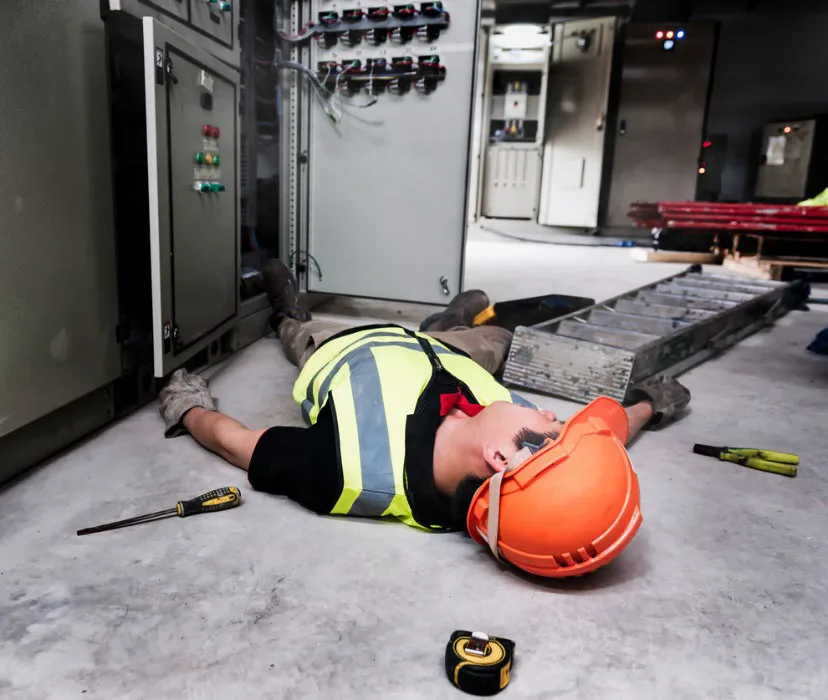
And when it happens, the consequences are immediate:
- Serious injury or fatality
- Catastrophic equipment damage
- Unplanned outages
- Loss of service and reputation
This isn’t theoretical. It’s inherent in the infrastructure.
Why Traditional Risk Thinking Falls Short
Most data centre strategies focus on:
- Uptime
- Cooling
- Cybersecurity
- Physical security
But arc flash risk often sits in a blind spot — assumed to be “managed” without being properly quantified.
That leads to critical gaps:
- Unknown incident energy levels
- Incorrect or excessive PPE requirements
- Unsafe working assumptions
- No clear understanding of where the real risks are
You can’t protect what you haven’t measured.
Arc Flash Risk Management: From Unknown to Controlled
Effective arc flash management starts with one thing:
Clarity.
A professional arc flash study provides:
- Accurate incident energy calculations
- Identification of high-risk equipment (especially ≥8 cal/cm²)
- Defined safe working boundaries
- Practical recommendations to reduce risk at source
This allows you to move from reactive safety to engineered control.
Engineering Out the Risk, Not Just Managing It
In high-performance environments like data centres, PPE alone is not a strategy.
It’s the last line of defence.
The real objective should be:
- Reducing incident energy levels where possible
- Improving system coordination
- Eliminating unnecessary exposure to live equipment
Where risk cannot be eliminated, it must be:
- Clearly defined
- Properly controlled
- Fully understood by those working on the system
The Cost of Getting It Wrong
An arc-flash event in a data centre doesn’t just affect safety.
It impacts:
- Service continuity
- Client confidence
- Contractual obligations
- Commercial performance
Downtime isn’t just inconvenient; it’s costly and reputationally damaging.
And in many cases, preventable.
People Are Still the Trigger Point
Despite advances in automation, human interaction remains a key factor.
Routine activities such as:
- Switching
- Maintenance
- Fault finding
Can all initiate an arc flash if risks are not properly controlled.
That’s why training and awareness are critical:
- Understanding real hazards (not assumptions)
- Following defined safe systems of work
- Using PPE correctly where required
Because the risk doesn’t sit in the system alone, it sits in the interaction with it.
Is Your Risk Profile Still Valid?
Data centres are constantly evolving:
- Capacity upgrades
- System modifications
- Infrastructure changes
Each of these can alter your arc flash risk profile.
Best practice is clear:
- Review every 5 years
- Or immediately following any significant system change
If your study is outdated, so are your safety assumptions.
Operational Resilience Starts with Electrical Safety
You invest heavily in uptime.
In redundancy.
In resilience.
But without a clear understanding of arc flash risk, there is still a potential single point of failure.
Uncontrolled electrical hazard.
Take Control Before It’s Tested
The organisations leading in data centre performance aren’t just reactive.
They understand their risks in detail.
They design them out where possible.
And they control what remains.
Speak to ESUK
If you’re unsure:
- When your last arc flash study was completed
- Whether your incident energy levels are acceptable
- Or how exposed your teams really are
Now is the time to find out.
Speak to one of our Principal Consultants for a free no-obligation discussion.
We’ll help you understand where you stand — and what to do next.