Arc Flash PPE Risks
To be able to do this it is necessary to:
- understand the hazard that is present
- the level of risk that it presents
- whom could be harmed
- how this could happen and what the severity of potential outcome could be
You need to quantify the risk level, in the case of arc flash and arc blast. This is done through an arc flash study, allowing the incident energy at points of work to be determined. Based on incident energy values, control measures should be introduced that focus on eliminating the hazard, prioritising collective control measures over protecting the individual and ensuring that safe systems of work exist. It is only where PPE has been determined as providing the most effective level of protection, should it be considered as the primary control measure. For example, where incident energy is moderate, there are no other effective control measures to be implemented, the frequency of exposure to arc flash hazard is limited, and the number of persons exposed is minimal.
Find out whether the biggest risk of Industrial arc flash at high voltage or low voltage.
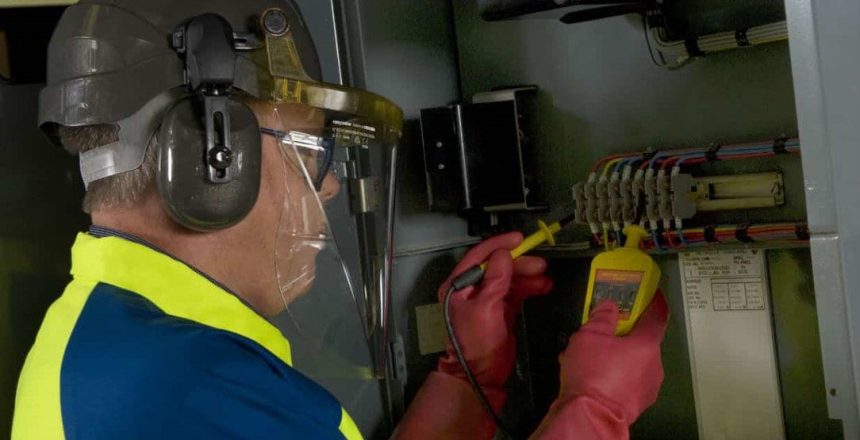
A culture of imposing mandatory Arc Flash PPE has started to evolve in the UK where either person are put in clothing where the ATPV value of that clothing does not offer protection against the incident energy present, or the wearing of full arc flash suits is blanket imposed. This can put the wearer at risk through reduced mobility and risk of heat exhaustion for no reason at all.
Arc flash PPE does have a role to play in keeping people safe, however, as with all PPE, it should be considered as a last line of protection, rather than the answer to all of our problems.
Why not visit our Strategic Partner J & K Ross for further information regarding Arc Flash PPE? Click here
Call to Action
In every industry, personnel safety is not negotiable. Arc flash studies are critical to understanding the level of arc flash hazard so that if PPE is required the correct level of protection can be used. Without an arc flash study, you do not know the level of hazard for each piece of equipment and cannot select the right level of protective equipment to wear when exposed to arc flash risk. Prioritise arc flash studies today and proactively step towards a safer and more efficient facility. Your arc flash study should be reviewed every 5 years, or sooner, if you are making changes to your electrical system. Take advantage of a free consultation with one of our Principal Consultants to discuss your needs and have your questions answered. We can provide you with a free, no obligation quotation for your arc flash needs including training.
Call now on 0800 652 1124, email us at info@elecsafety.co.uk or contact us through our website at https://elecsafety.co.uk/about/contact/.
 Back to news